How a Visual Artist Made Motion Visuals for a Whole Album with SunoMV (A Real Case, 2026)
How a Visual Artist Made Motion Visuals for a Whole Album with SunoMV (A Real Case, 2026)
Lin Xi (a pseudonym) is a new-media visual artist. In early 2026 she finished an 8-track concept album and wanted a set of motion visuals for it—not an MV in the traditional sense (no narrative, no characters), and not just static cover art, but something in between: a “motion visual work” that could loop on screens at an in-person exhibition and also live on streaming platforms as visuals.
This is the story of how she made it with SunoMV, including her early misconception, the calls she made along the way, and the final delivery standard.
Her brief: eight tracks, one visual language
What Lin Xi cared about most was not a single track looking good, but consistency across all eight. In her words:
“An album is a whole. If the first track is cyber-neon, the second suddenly turns to ink wash, and the third jumps to photorealism, then it isn’t one album’s visuals—it’s eight people each doing their own thing.”
That points straight to the core constraint of this project: stylistic unity. The eight tracks have different moods (some cold, some warm, some restless, some still), but the visual language has to make anyone recognize at a glance: “this is the same album.”
She had tried doing them one by one with a general image tool, and the result was exactly what she feared—each fine on its own, but scattered together. The problem wasn’t whether each image was good; it was that there was no single rule running through them all.
Her approach: set the visual style first, then let all eight share it
The turning point was that she changed the order: instead of “imagining visuals track by track,” she first defined one visual style for the whole album, then made all eight tracks adopt it.
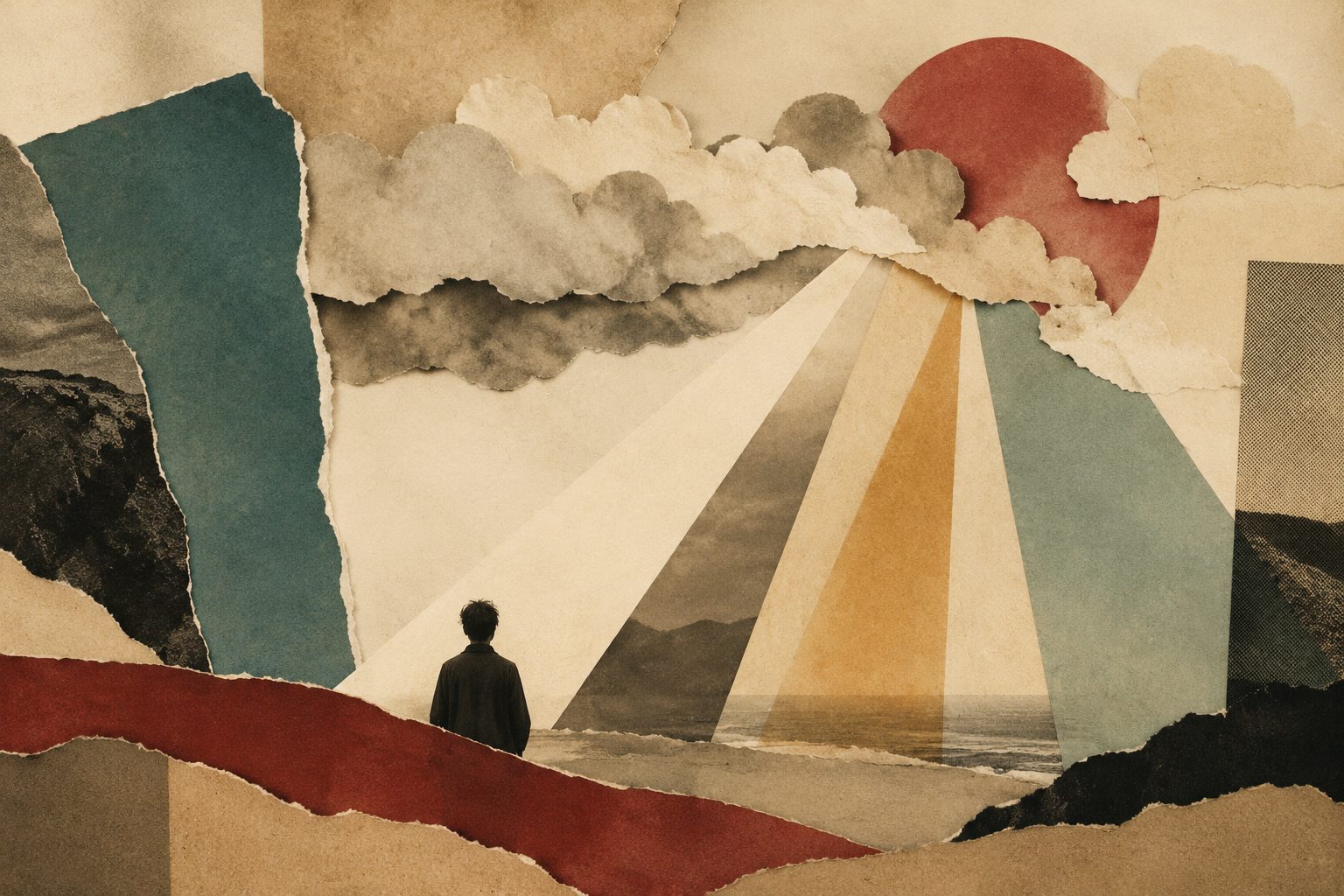
She used the abstract, cinematic visual direction in SunoMV (suited to work with no concrete characters or narrative, emphasizing mood and texture). Concretely:
- First fix the album-level visual tone: one palette, one texture, one kind of movement (say, “cool colors + grain + slow drift”), as the shared base for all eight;
- Then use mood to differentiate: within that one tone, distinguish the eight moods through light and dark, fast and slow pacing, and frame density—not by switching to a completely different style;
- Let music drive the visuals: each track uses its own song as the time skeleton, so the motion follows the energy of the music.
Her call: better to keep all eight “restrained” than to have one go especially hard and break the whole. The top goal of album visuals is “a set,” not “the most explosive single track.”
This “set the style first, then let many tracks share it” mindset overlaps with the method for preventing style drift in series content—see the scene consistency method.
The trap along the way: turning “motion visuals” into an “MV”
Lin Xi took a detour: at one point she wanted to add lyric subtitles and shot cuts to every track, and the more she did, the more it looked like an ordinary MV, losing the breathing room a “visual work” needs.
Her final judgment:
“Motion visuals don’t need to feed every bit of information to the viewer. They’re meant to ‘surround the environment,’ not to ‘be stared at for a story.’ So I removed most of the lyric subtitles, keeping them only on the key line of a few tracks, and let the visuals return to mood itself.”
This is the fundamental divide between visual art and an MV—an MV serves narrative, motion visuals serve mood. If what you’re making is an MV with lyrics and a story, that’s a different method; see the storyboard workflow from a Suno song to a finished cut.
Delivery standard: it has to hold up both in galleries and on streaming
Lin Xi finally set two delivery standards for the work:
- In-person exhibition: high resolution (she exported 2K), because exhibition screens are large and low resolution looks blurry;
- Streaming platforms: loop-friendly—the ends join up, each track plays standalone, and all eight play back-to-back too.
She made the eight into a set that can hang individually and also string into a 40-minute loop, and ran it on three screens in rotation at a small exhibition, to good response. She said what surprised her most was “the sophistication that consistency brings”—viewers couldn’t necessarily say why, but they could feel “this is one complete thing.”
If you also want a stylistically unified set of motion visuals for an album or a series, start at the SunoMV cinematic abstract music video generator; to push the visuals toward a visualizer direction, see the AI music visualizer guide.
FAQ: a visual artist making album motion visuals
Q: What’s the difference between motion visuals and an MV? A: An MV serves narrative (story, lyrics, shot cuts); motion visuals serve mood (emphasizing breathing room, texture, looping). The same tool can do both, but the goals differ, so the trade-offs differ.
Q: How do you keep a whole album’s visuals unified? A: First define one visual tone for the whole album (palette, texture, movement), then make every track adopt it, distinguishing tracks by light/dark mood and fast/slow pacing rather than switching to a completely different style.
Q: Do motion visuals need lyric subtitles? A: Usually not, or keep very few. Motion visuals are meant to “surround the environment,” and too much text turns them into an ordinary MV and loses the mood.
Q: Where are these works suited to be used? A: Looping screens at in-person exhibitions, visuals on streaming platforms, background projection at live shows, and any scenario needing motion that “has mood but doesn’t steal the scene.”
Q: Can you do it without a professional editing background? A: Yes. With a tool like SunoMV, the steps of music driving visuals and unified visual style are tooled up; the focus is actually the upfront aesthetic judgment—setting one visual language that runs through everything.
Closing thoughts
The most worth-remembering point of Lin Xi’s case isn’t how strong some feature is, but that she got the order right: define the whole album’s visual language first, then let all eight share it, rather than each doing its own thing track by track. The sophistication that consistency brings often moves people more than a single explosive track.
To make a unified set of motion visuals for your album or series, try the SunoMV cinematic abstract music video generator.
BibiGPT Team
Popular guides
- 01 Suno AI Prompt Guide 2026: 10 Tips + Copy-Paste Templates
- 02 How to Turn Any Suno Song into a Music Video: The Complete Workflow
- 03 7 Best Free AI Song Generators in 2026 (Suno, Udio & More, Compared)
- 04 Suno v5 AI Music Complete Guide (2026): From Blank Page to Release-Ready Single
- 05 Suno Video Download Guide 2026: 3 Ways to Export AI Songs as MP4