/icon.png)

Suno vs Udio vs Riffusion 2026: How to Choose an AI Music Generator

You spend half an hour polishing a set of lyrics, tweaking the prompt over and over, and finally generate a track that gives you goosebumps on first listen. The moment you hit play feels great — then you want to post it to TikTok, drop it into a friend’s wedding video, use it as your podcast intro. And the first real question shows up: can I actually take this song with me? On some platforms you click once and download an mp3. On others, you were told this year that your creations now have to stay inside the walls.
For creators, “which AI music generator to use” in 2026 is no longer just about “who sounds the most human.” Underneath it sits a decision about ownership, portability, and cost: is the thing you made an asset you own, or a one-time experience locked on someone else’s server?
Over on r/SunoAI and r/aimusicvideo, every few days someone posts a “I tested every AI music tool” roundup, and the comments turn into a brawl. This piece won’t hand you yet another “top 10 tools” listicle. Instead it uses the three lines that actually decide your experience — can you take the song, can you turn it into a video, do you have to pay — to help you pick the right one among Suno, Udio, and Riffusion.
Why picking the right generator matters more in 2026
For the last two years, the battleground for AI music tools was “does it sound like a real singer.” By 2026, everyone cleared that bar. What actually separates the tools now is the rights model and who owns the output.
On October 29, 2025, Udio settled its copyright case with Universal Music Group (UMG) and announced a licensed music platform launching in 2026. The catch: it’s a “walled garden” — AI creations made inside the platform cannot be downloaded, exported, or uploaded to Spotify, Apple Music, YouTube, or any external platform. According to Rolling Stone’s reporting, the point is to avoid AI songs “directly cannibalizing” artists’ real releases. Warner Music followed with a similar deal in November.
Practical rule: Before choosing a tool, ask one question — “will I still be able to take what I make tomorrow?” Only what you can take is truly your asset.
This is a wake-up call for every creator: you’re not just picking a generator, you’re picking a set of rules about who owns your work. The same melody can be shippable footage on one platform and a locked-in, one-time toy on another.

Suno: from generator to a full generative studio
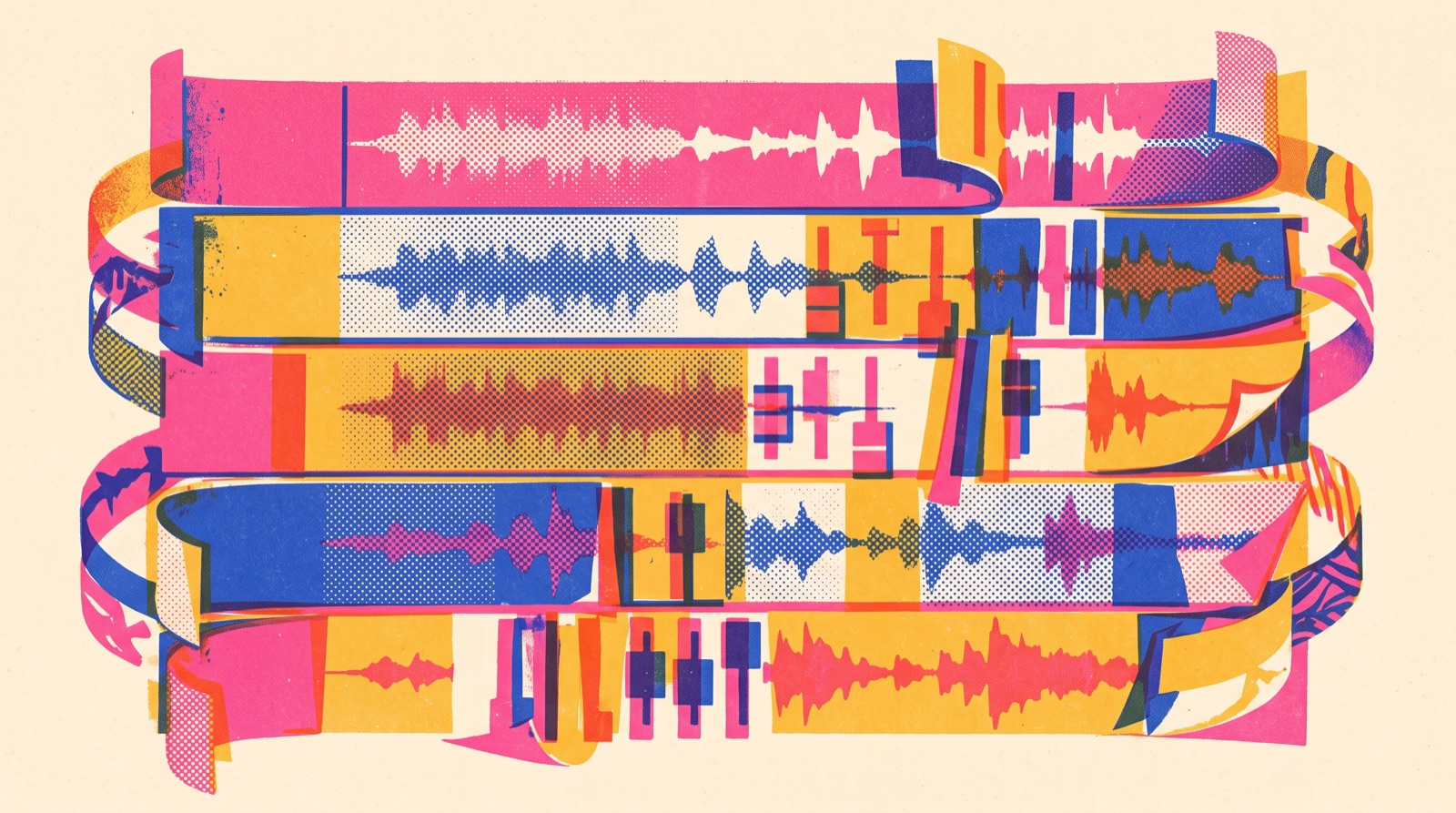
By 2026, Suno is no longer “a site that generates songs” — it’s a full in-browser production suite. It shipped Suno Studio, a digital audio workstation (DAW) built into the browser. According to Music Business Worldwide, this moves Suno from “one-click song” to “an iterative, professional production chain you can refine.”
Where it’s strong
- Stem separation: per MusicTech’s review, Suno Studio can split a track into up to 12 time-aligned stems (drums, bass, lead vocals, backing vocals, guitar, piano, and more), exportable as WAV to drop into Ableton, Logic, or any DAW.
- Refine without switching apps: stem editing, EQ, timing, and FX removal all happen in-browser; the February 2026 update added Warp Markers, Alternates, and time-signature support.
- Output is downloadable: this is the biggest difference from Udio — you can take what you make.
Who Suno is for
People who want to make music seriously, who need to feed the AI-generated skeleton into a pro workflow, who want stems for further work. If you just want a shippable song fast, the full suite may feel heavy.
Practical rule: Choose Suno if you need to “open it up and edit”; if you only want to “generate one and go,” the DAW is dead weight.
Udio: licensed and legit, but your output is walled in
Udio has long had a reputation for sound quality and consistency, and its 2025 settlement made it “the first AI music platform licensed with a major label,” which in theory means the least legal risk for commercial use. But the cost, again, is the walled garden.
According to WebPronews, Udio disabled downloads after the settlement, giving users only a 48-hour window to rescue previously created work before the walls went up. In other words, new songs you make in Udio stay in Udio by default.
Worth noting: as of July 2026, neither UMG nor Udio has officially confirmed that the “joint licensed platform” has publicly launched — the October 2025 announcement remains the latest official word. So Udio is in a transition period: the rules already changed, but the full shape of the new platform hasn’t landed yet.
Practical rule: If your work ultimately has to go off-platform (TikTok, YouTube, client delivery), a walled-garden tool isn’t fit for primary use right now.
Who Udio is for
Cases with extreme copyright sensitivity where you only need to consume the music inside the platform (in-platform background music, internal enterprise use). Creators who want to make music videos or post everywhere should be cautious for now.

Riffusion: free and unlimited, the creator’s fallback
While Suno and Udio tightened free tiers and raised the barrier, Riffusion planted itself on the other end. According to Undetectr’s review, Riffusion is “one of the only genuinely free options left after Suno and Udio tightened their free tiers.”
Its pitch is simple: text-to-music, usable without signup, supports many styles and languages, and the output is royalty-free for personal and commercial use. To be honest about it, though — some sources note Riffusion has a daily-credit mechanism, and once free credits run out you subscribe for more, so “unlimited” is mostly relative to how much Suno/Udio tightened.
Practical rule: When your budget is zero and you just want commercial-safe music fast, Riffusion is the least stressful starting point.
Who Riffusion is for
Budget-sensitive solo creators, short-video background music, people who need lots of trial and error. Its polish doesn’t match Suno’s full suite, but “free + takeable + commercial-safe” is already enough for many.

How to choose: one table
Putting all three on the table, compared by what creators care about most:
| Dimension | Suno | Udio | Riffusion |
|---|---|---|---|
| Can you download/take the output | Yes (incl. WAV stems) | Restricted (walled garden, unusable off-site) | Yes (royalty-free) |
| Best for | Serious music, deep refining | In-platform compliant use | Budget-sensitive, fast output |
| Pro depth | Highest (built-in DAW + 12 stems) | High (great sound/consistency) | Medium (enough, wins on freedom) |
| Free-tier friendliness | Tightened | Transition, rules shifting | Friendliest (usable without signup) |
| Direct commercial use | Yes | Depends on platform rules | Yes (royalty-free) |
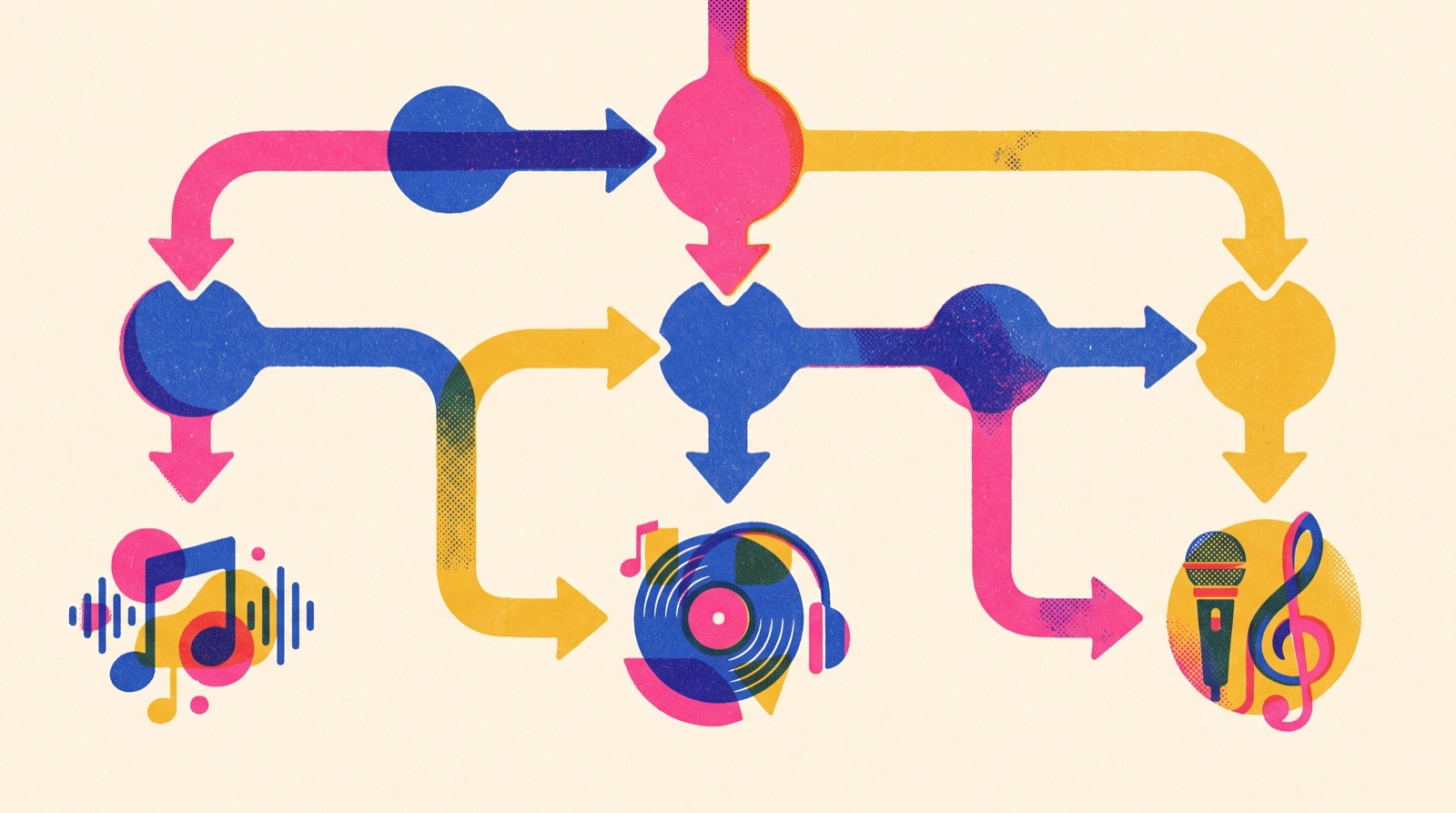
Decision filter: First ask “does the output need to go off-platform?” — if yes, choose between Suno / Riffusion; then ask “do I need to refine stems?” — yes → Suno, no → Riffusion; zero budget → start with Riffusion.
This comparison also explains why the walled-garden model is a dealbreaker for most creators: you make music mostly to put it out there. Music you can’t release is just a one-time in-platform experience, no matter how good it sounds.
Frequently asked questions
Is Suno or Udio better in sound quality?
Both are very high by 2026; the gap is more about “workflow” than “timbre.” Suno wins on splitting into 12 refinable stems and downloadable output; Udio wins on licensed compliance, but its output is locked in-platform. For creators who post everywhere, portability matters far more than a fraction-of-a-point quality difference.
Can songs made in Udio still be downloaded?
Per public reporting, Udio disabled downloads after its late-2025 copyright settlement, giving users only a 48-hour window to rescue older work. Newly generated pieces stay in-platform by default. As of July 2026 the full shape of the joint licensed platform hasn’t been officially confirmed as launched — check the latest official announcement.
Is Riffusion really completely free?
Riffusion leads on no-signup, free usage, and royalty-free output, making it one of the most budget-friendly choices right now. But some sources note a daily-credit mechanism where you subscribe for more once credits run out, so “unlimited” is relative to Suno/Udio’s tightening.
Once I have a song, how do I turn it into something I can post?
Music alone barely spreads on social platforms — an mp3 has no visuals, so it doesn’t get scrolled to or recommended. What actually posts is a music video with visuals. This step has nothing to do with which generator you used; it depends on the tool you use to put pictures to the song (see the next section).
From “a song” to “a shippable music video”
After you’ve picked a generator and made your song, the step creators most often get stuck on is the next one: you’ve got the song, but nothing to ship. An mp3 with no visuals gets no clicks on TikTok or Reels; learning to edit takes weeks.
That’s exactly why SunoMV exists — no matter whether your song came from Suno, Udio, or Riffusion, as long as you can get the finished file, SunoMV turns it into a music video you can post directly. A practical workflow looks like this:
- Make the song in a generator — refine in Suno, or ship fast in Riffusion, whichever fits you
- Get the finished link or audio — this step decides whether you can even continue, and it’s the walled garden’s weak point
- Paste it into SunoMV — AI generates a per-line image storyboard from your lyrics
- Pick a visual style — Ghibli, cyberpunk, watercolor… pick the vibe with your eyes, not by reading prompt jargon
- Export the video — auto-synced per-line subtitles and transitions, exported at 720p/1080p, ready for TikTok / Reels / Shorts
The people who actually earn attention from AI music aren’t asking “which generator sounds a fraction better.” They’re asking “can I get what I made in front of people, fast and well?” The generator decides whether you can get a good song; whether you can turn it into a shippable video decides whether anyone hears it.
Want to turn your next AI song into a music video worth posting? Open SunoMV, paste a link, pick a style, and ship in minutes.
SunoMV Team
Popular guides
More in this series
- Seedance 2.0 Goes Native 4K, 2.5 Teases 30-Second Shots: What ByteDance's Launch Means for AI Music Videos (2026)
- Suno Raised $400M: How Your AI Song Gets Heard in 2026
- Best AI Music Video Makers 2026: 8 Tools Compared (With a Tool-Picking Decision Tree)
- Make AI Songs Free in 2026 — Then Turn Them into an MV
- Best AI Music Visualization Tools 2026: SunoMV, Kaiber, Neural Frames & More