

MiniMax H3 vs H3 Max vs H3 Max Turbo vs FastH3: Every Hailuo H3 Version Explained (2026)

You open a model list to find a shot for your chorus: MiniMax H3, H3 Max, H3 Max Turbo, MiniMax-H3-Max, H3-Lite, HeyGen Video, FastH3. The names look like one family, yet prices run from two and a half cents to sixteen cents per second. One says “post-trained.” Another says “built on open-source H3.” Search GitHub and you find 4-step distills, an Apple Silicon port, a TPU port. All you wanted to know was which one is official, which one fits your shot, and which one is cheaper.
That is not a question about one model. It is a map of an open-source ecosystem. Since MiniMax released the H3 weights in August 2026, the official API, hosting platforms, a video company and university labs have all shipped their own versions on top of it.
Most coverage says “H3 is great” or pastes one provider’s price. This post puts every version in one table: who made it, what it is built on, what changed, which of t2v / i2v / r2v / lip-sync it does, what it costs per second, and whether you can run it yourself. Every number links to a source, checked on Oct 26, 2026.
Quick answer: which H3 is which
- MiniMax H3 = Hailuo 03 = Hailuo H3. Same base model, different names. MiniMax unveiled it as Hailuo 03 at WAIC in July 2026 and open-sourced the weights on Aug 3.
- “H3 Max” means two different things. fal’s H3 Max is a closed model fal post-trained on open H3. MiniMax’s own API also sells a MiniMax-H3-Max, built around multi-asset references. Same name, different products.
- H3 Max Turbo is fal’s faster H3 Max. For text- and image-to-video it costs about half of H3 Max; since late October it also does reference-to-video (face lock), at the same price as H3 Max.
- FastH3 is Hao AI Lab’s open 4-step distill. It runs on your own GPUs, consumer RTX cards included.
- Clip length: 4–15 s on open H3, 5–15 s on fal H3 Max, from 0.92 s on Turbo reference-to-video, up to 30 s on HeyGen Video.
The rest of this post backs each line with a source.
Start with the origin. This is MiniMax’s post from Oct 25: eleven more community projects joined the H3 ecosystem index, including 8-step reference-conditioned video plus audio, 4-step distillation, sparse attention and reference-token compression.
 MiniMax (official) @MiniMax_AI
More reference control. Fewer denoising steps. More places to run H3.
The latest community contributions span 8-step reference-conditioned video + audio, 4-step distillation, sparse attention, and reference-token compression - alongside serving and workflow integrations across GPU servers, TPUs, and Apple Silicon.
What matters is what this enables: more affordable experimentation, finer creative control, and more choices about where and how video generation runs. Open models become more useful when the community can improve the methods, adapt the runtime, and build workflows around them.
Credit to @haoailab @yisun0618 @lanfeng491270 @guocheng_qian @Alissonerdx @ddalcu @tazmannner @HaochengXiUCB @huggingface @Jhuaplin, and the PTD, DMAD, SparkH3, TorchTPU and FlashML teams - including Zhengming Yu and zechengtang on GitHub.
11 additions to the H3 ecosystem index. Thank you to everyone building, testing, and sharing.
github.com/MiniMax-AI/awesome-minimax-h3-…

Source: MiniMax on X, Oct 25, 2026 (UTC). The linked index is awesome-minimax-h3-integration.
Table of Contents
- Quick answer: which H3 is which
- What MiniMax actually open-sourced
- Why open weights matter: local runs, fine-tunes, post-trained skills
- The H3 universe in one table
- Timeline: from launch to Turbo reference-to-video
- Price per second by provider, and what local costs
- Where the H3 family ranks (Oct 26, 2026 snapshot)
- How we use H3 in SunoMV
- FAQ
What MiniMax actually open-sourced
In one line: the open release is two H3-Base checkpoints, not the full system MiniMax runs online.
According to the official model card on Hugging Face, H3 generates video and audio jointly: one transformer predicts picture and sound together, producing 4 to 15 seconds at 24 FPS with 32 kHz stereo audio. The core H3-Omni-Transformer is a 33B-parameter dense, single-stream transformer, with about 13B of those parameters in AdaLN branches that can be precomputed and cached for inference.
Two BF16 checkpoints were released:
- H3-Base-FL2VA: text-to-video, plus first-frame, last-frame and first-and-last-frame video.
- H3-Base-Ref2VA: omni-reference mode with up to 9 images, 3 video clips and 3 audio clips, 12 files maximum.
Two pieces stayed closed: H3-Context-IR, which interprets the prompt and references, and H3-Regenerate-2K, which re-renders 768p output at 2K. So the open model renders at 768p on the short side by default. For 2K you either call the official API or use a community upscaler. MiniMax spelled out the scope in its Aug 3, 2026 open-source announcement.

Open weights mean you can run it on your own GPUs, but the full weights are large. Hardware tiers come later.
License: not MIT, and check the territory clause first
H3 ships under the MiniMax H3 Community License. The clauses that matter most to creators, from the LICENSE:
- The grant covers “worldwide, excluding the Excluded Territories.” The excluded territories are the European Union, the United Kingdom, the Republic of Korea and the United States. Deployment there requires contacting MiniMax for a separate license.
- Products or services built with H3 must display “Powered by MiniMax H3.”
- Commercial products with more than $20 million in yearly revenue need prior written authorization from MiniMax.
Practical rule: With “open source,” read the license before you buy the GPU. If you are in the US, EU, UK or Korea and want to run H3 locally, step one is the license terms, not the download.
If you want to see what a local run looks like, this ComfyUI tutorial from MDMZ goes from installing the nodes to a finished clip in about nine minutes:
Why open weights matter: local runs, fine-tunes, post-trained skills
Once the weights are out, anyone can build on them, which a closed model never allows. In the three months since release, the changes fall into three groups.
Group one: run it somewhere else. The official example serves H3 with SGLang across multiple GPUs. The SGLang H3 cookbook lists recipes for 4×H200/H100, 2×RTX 5090 with offload, and a single RTX 4090 24GB with INT8. The community added Apple Silicon via mlx-serve and antirez’s Metal engine h3.c, plus a Cloud TPU example from Hugging Face.
Group two: make it faster. Video diffusion is slow mostly because of denoising steps and attention cost. Hao AI Lab’s FastH3 Preview (Aug 27, 2026) distills H3 to 4 steps and adds 90%-sparse Video Sparse Attention (VSA). The lab reports “up to 14x speedup on a single Nvidia Blackwell GPU,” and under 13 seconds for a 15-second 768p clip on 8×B200. PTD and DMAD, both named in MiniMax’s post, are also 4-step distills; Spark-H3 does sparse attention; VPack compresses reference-video tokens.
Group three: post-train new skills. This is the group that matters most if you make music videos or short dramas:
- Lip-sync: drive a character’s mouth with a vocal track. fal launched an H3 Max lip-sync endpoint on Sept 17, 2026, and the community has ComfyUI workflows for character swap plus lip-sync.
- Reference-to-video (r2v) face lock: give it a few photos of a character and the person in the video keeps that face, instead of the photo being used as frame one. FastH3-Omni (Oct 20, 2026) brought reference-conditioned video plus audio down to 8 steps.
- Aesthetics and prompt adherence: fal’s H3 Max and HeyGen’s HeyGen Video are both closed versions post-trained on top of open H3.
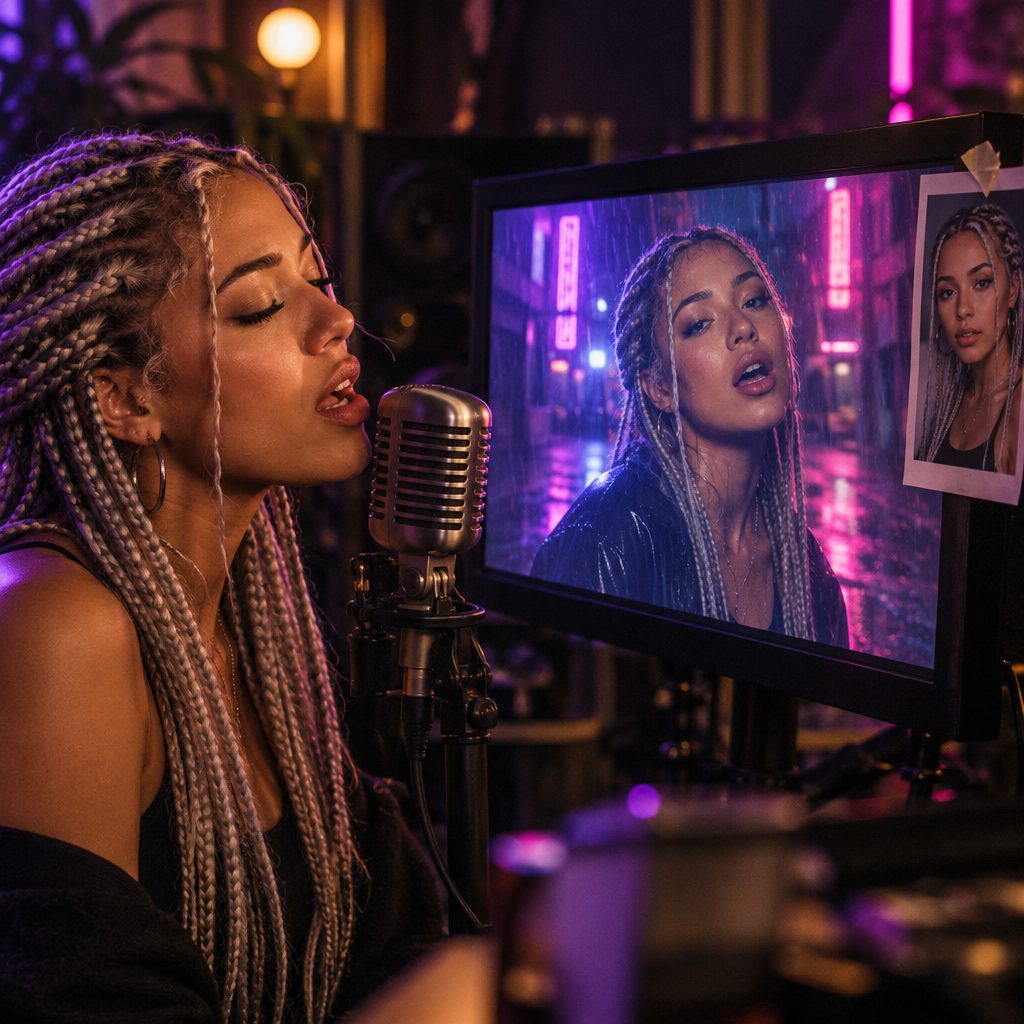
Lip-sync and reference-photo face lock are the two most common directions for post-trained H3 versions.
Another MDMZ video shows character swap plus lip-sync on open H3, which makes “post-trained skills” concrete:
Practical rule: When something says “built on H3,” ask which kind: moved to new hardware (same model), distilled for speed (faster, may lose detail), or post-trained (different abilities). Price and quality differ a lot between the three.
The H3 universe in one table
The name that trips everyone up is “H3 Max”: MiniMax’s own MiniMax-H3-Max and fal’s H3 Max are different products. The first is MiniMax’s extended model built around multi-asset references (images, video, audio). The second is a closed version post-trained by fal on open H3, and H3 Max Turbo is the configuration fal tuned hardest for throughput. MiniMax’s API has no H3 called “Turbo.”
| Version | Who / built on | What changed, what it does | Resolution · length | Run locally? |
|---|---|---|---|---|
| MiniMax H3 open weights (FL2VA / Ref2VA) | MiniMax, open weights | The original. t2v, first/last frame, multi-reference r2v, native audio | 768p short side · 4–15 s | Yes (license territory limits apply) |
| MiniMax API: H3 / H3-Highspeed / H3-Lite / H3-Max | MiniMax, hosted | Full system (with Context-IR; H3 reaches 2K); t2v, i2v, first/last frame and reference all supported | H3 up to 2K; Lite has 480P | No |
| fal H3 Max / H3 Max Turbo | Post-trained by fal on open H3, closed | Tuned for prompt adherence and aesthetics, sped up on fal’s engine; t2v, i2v (optional end frame), r2v, lip-sync | 480p / 768p / 1080p · 5–15 s (Turbo r2v from 0.92 s) | No |
| HeyGen Video (heygen-video-1) | Post-trained by HeyGen on H3 | t2v, i2v, r2v, with dialogue and ambience generated together | 480p–2K · t2v/i2v up to 30 s, r2v 5–15 s | No |
| FastH3 / FastH3-Omni | Hao AI Lab, distillation + sparse attention | 4 or 8 steps; Omni adds reference-conditioned video plus audio | Mainly 768p | Yes, with consumer RTX recipes |
| Community speed-ups and tools (PTD, DMAD, LightX2V Turbo LoRA, Sol-H3, mlx-serve, h3.c and more) | Universities, vendors, individual developers | Distilled LoRAs, sparse attention, Apple Silicon, TPU, ComfyUI upscaling | Varies | Yes |
Sources: H3 model card, MiniMax pricing, fal H3 Max page, HeyGen Video docs, FastH3 blog, ecosystem index.
The 11 projects added on Oct 25
The “11 additions” in MiniMax’s post match PR #25 in the index repo. Grouped by purpose:
- Faster: FastH3-Omni 8-step (reference video plus audio), PTD (4- and 6-step trajectory distillation), DMAD (4-step LoRAs plus training code), Spark-H3 (adaptive block-sparse attention).
- Reference control: VPack (compresses reference-video tokens), TARA-H3 (experimental temporal alignment of reference-video attention).
- Where it runs: UniServe (HTTP serving on 1–8 GPUs), TorchTPU + Diffusers (Cloud TPU v6e-4), mlx-serve (Apple Silicon).
- Workflows: FreeVideo (ComfyUI workspace on VDN-H3 with an 8GB VRAM path), ComfyUI-H3-ResCascade (upscales to 1080p/1440p while keeping the original audio).
Timeline: from launch to Turbo reference-to-video
| Date (2026) | Event |
|---|---|
| Jul 17 | MiniMax shows the model as Hailuo 03 at WAIC 2026 (our first-look post) |
| Jul 30–31 | MiniMax H3 launches (reports differ between the 30th and 31st) on the official API; fal lists minimax/h3 the same day |
| Aug 3 | Weights open-sourced, first Hugging Face commit; ComfyUI day-0 support |
| Aug 23 | fal H3 Max text-to-video and image-to-video go live |
| Aug 27 | Hao AI Lab releases FastH3 Preview (4 steps + sparse attention) |
| Aug 29–31 | fal H3 Max reference-to-video (r2v) goes live |
| Sept 2 | fal H3 Max Turbo text-to-video and image-to-video go live |
| Sept 17 | fal H3 Max lip-sync endpoint goes live |
| Sept 30 | HeyGen launches HeyGen Video, built on H3 |
| Oct 6 | FastH3 publishes consumer RTX recipes |
| Oct 20 | FastH3-Omni: 8-step reference-conditioned video plus audio |
| Oct 25 | MiniMax announces 11 additions to the ecosystem index |
| Late Oct | fal H3 Max Turbo reference-to-video (r2v) is live (available as of Oct 26; fal has not published a launch date) |
Sources: MiniMax open-source announcement, fal model catalog, fal’s H3 Max r2v post, MiniMax congratulating HeyGen, FastH3 RTX recipes, FastH3-Omni update.
Practical rule: The most useful version of an open model often shows up one to three months after release. Don’t judge the whole family by launch-day reviews.
Price per second by provider, and what local costs
All prices below are standard per-second rates (USD per second of output video), checked Oct 26, 2026. Promotions are noted separately and not used as the headline number.

The same H3 can cost several times more per second depending on provider and resolution.
| Provider · version | 480P | 768P | 1080P / 2K | Notes |
|---|---|---|---|---|
| MiniMax API · MiniMax-H3 | — | $0.08 | 2K $0.13 | Same price across task types at a given resolution |
| MiniMax API · H3-Highspeed / H3-Lite | Lite $0.025 | Highspeed $0.06 / Lite $0.04 | — | |
| MiniMax API · MiniMax-H3-Max | $0.05 | $0.08 | — | Input video billed separately ($0.143/s at 768P) |
| fal · H3 Max (t2v / i2v / r2v) | $0.05 | $0.08 | 1080p $0.16 | t2v / i2v currently 35% off until Oct 31 |
| fal · H3 Max Turbo (t2v / i2v) | $0.025 | $0.04 | 1080p $0.08 | Currently 35% off until Oct 31 |
| fal · H3 Max Turbo (r2v) | $0.05 | $0.08 | 1080p $0.16 | fal bills $0.05/s (480P baseline); 768P / 1080P convert at 1.6× / 3.2× billing units; same as H3 Max r2v |
| Replicate · minimax/h3 | — | $0.08 | 2K $0.13 |
Sources: MiniMax pricing, fal H3 Max, fal H3 Max Turbo image-to-video, fal H3 Max Turbo reference-to-video, fal pricing API, Replicate minimax/h3.
Three things that are easy to miss:
- fal’s 1080P is not native: the H3 Max Turbo r2v docs describe 1080P as “latent refinement from a native 768P source,” and the open model itself renders 768p on the short side.
- Turbo r2v is not the cheap option: fal’s model page says “$0.05 per second,” which is the 480P baseline; 768P and 1080P convert at 1.6× and 3.2× billing units, so it works out to $0.05 / $0.08 / $0.16 per second: double Turbo’s image-to-video standard rate and the same as H3 Max r2v. Turbo r2v buys you speed and face lock, not savings. The savings are in Turbo’s t2v / i2v, at roughly half of H3 Max.
- fal’s own speed numbers: on fal’s landing page, a 5-second 768p clip measured on Sept 8 took 1.54 s of denoising on Turbo versus 2.46 s on H3 Max. That is fal’s measurement, not a third-party benchmark.
What local hardware you need
The full Hugging Face repo is about 464 GiB, and a single transformer checkpoint is about 61.7 GiB (figures from the ecosystem index). Roughly three tiers:
- Data-center GPUs: the official example uses 4-GPU SGLang; SGLang has verified 4×H200/H100.
- High-end consumer GPUs: 2×RTX 5090 with offload, or a single RTX 4090 24GB running INT8; the community has a 19.5 GiB pruned INT8 checkpoint.
- Under 12GB: GGUF Q4_K_M (about 10.6 GiB) fits 12–16GB cards; 8GB has an NF4 path. In FastH3’s RTX recipe, a 4090 capped at 8GB of VRAM took 82 seconds for a 5-second 832×480 clip.
Practical rule: If you make a few music videos a month, paying per second almost always beats buying GPUs. Local only pays off for batch runs, model changes or private deployment.
Where the H3 family ranks (Oct 26, 2026 snapshot)
The Artificial Analysis video leaderboard is blind voting: two clips from the same prompt, users pick the better one, and models are ranked by Elo. Positions as of Oct 26, 2026:
- Text-to-video (with audio): MiniMax H3 (768p) is #4 at Elo 1158±15; fal’s MiniMax H3 Max is #7 at 1154±15. #1 is Wan 3.0 (1175) and HeyGen Video 1 is #3 (1160). The top confidence intervals overlap.
- Image-to-video: MiniMax H3 (768p) is #1 at Elo 1140±16; MiniMax H3 Max is #6 at 1125±17.
- H3 Max Turbo: no separate entry on either board. fal’s landing page says it ranks #1 on image-to-video under the internal name “MiniMax H3 Turbo (768p)” (Elo 1201), but we could not find that entry on the public board on the day we checked, so treat it as unverified.
- VBench / VBench-2.0: we found no entry for the H3 family.

A video arena is a blind test like this: one prompt, two clips, pick the better one.
One interesting detail: on the Artificial Analysis image-to-video board, the open H3 base ranks above the post-trained H3 Max. Post-training mainly targeted prompt adherence and aesthetics, and blind votes do not necessarily reward those. Use rankings as a hint; the final test is your own shot.
How we use H3 in SunoMV
In SunoMV, people make music videos for their own songs and can pick a video model per shot. Shares only, no absolute numbers:
- Over the last 90 days, Seedance Fast generated about 69% of shots, and it is still the default workhorse.
- H3 Max Turbo generated about 5.8%, roughly 6 times H3 Max. Between the two H3 options, users clearly prefer Turbo, which is faster and, for text- and image-to-video, cheaper.
- We just connected H3 Max Turbo to reference-to-video: the character photo now tells the model “this is what the person looks like” instead of being locked in as the first frame. With the photo as frame one, the opening often looked like a photo coming to life; now the person can appear inside the scene with a consistent face.
- We also switched FAST mode back to H3 Max Turbo.
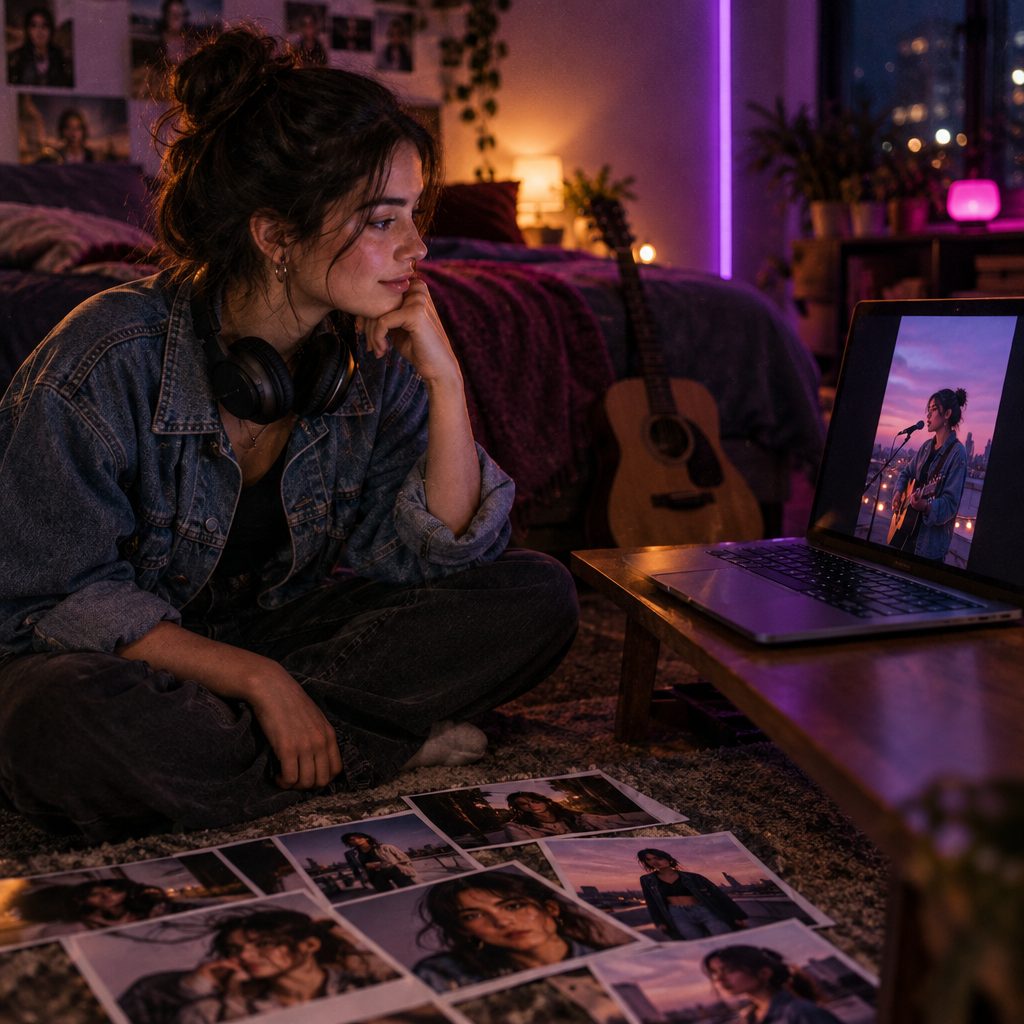
One chorus shot: a few reference photos, one shot description, one clip under 15 seconds.
Here is how I’d choose:
- Chorus shots that need the singer’s face: H3 Max Turbo reference-to-video with 2–4 photos of the same person, to lock the face.
- Establishing shots, mood, transitions: batch them on a cheap, fast model (for example Seedance Fast or H3 Max Turbo text-to-video) and keep the good ones.
- Shots that need singing mouth movement: run lip-sync separately; don’t expect a general text-to-video model to match your vocal.
- More control or private deployment: consider open H3 with FastH3 or community LoRAs on your own hardware, after checking the license territory.
For hands-on walkthroughs:
- Face-lock your music video with H3 Max Turbo reference-to-video
- The full lip-sync workflow for music videos with open-source H3
- MiniMax H3 Max Turbo prompt guide: 10 tips and copy-paste templates
- MiniMax H3 Max on SunoMV: specs, credits and when to pick it
- Hailuo 03 / MiniMax H3 first look: feeding the song in as reference audio
- For short dramas: face-lock drama characters with H3 Max Turbo and producing a short drama with open-source H3
FAQ
Is MiniMax H3 really open source? Can I use it commercially?
The open release is two H3-Base checkpoints (FL2VA and Ref2VA); the prompt-interpretation module and 2K regeneration stay closed. The MiniMax H3 Community License excludes the EU, UK, South Korea and the US from the default grant, requires a “Powered by MiniMax H3” notice, and requires written authorization for commercial products above $20 million in yearly revenue.
Are H3 Max and H3 Max Turbo official MiniMax models?
Not in the way the names suggest. fal’s H3 Max and H3 Max Turbo are closed versions post-trained by fal on open H3. MiniMax’s API has its own MiniMax-H3-Max, built around multi-asset references, and no H3 called Turbo.
What is the minimum GPU to run H3 locally?
The original BF16 weights need multiple data-center GPUs. With quantization and distillation, a single RTX 4090 24GB can run INT8, 12–16GB cards can try GGUF Q4, and 8GB has NF4 and FastH3 paths, at much lower speed.
How long can a MiniMax H3 or H3 Max clip be?
Open H3 generates 4–15 seconds per clip at 24 FPS. fal’s H3 Max and H3 Max Turbo take 5–15 seconds for text- and image-to-video, and Turbo reference-to-video starts at 0.92 seconds. HeyGen Video goes up to 30 seconds for text- and image-to-video. A three-minute song still needs many shots, so the per-shot cap matters less than keeping the same face across shots.
What resolution does H3 Max support: 720p or 1080p?
fal’s H3 Max and H3 Max Turbo offer 480P, 768P and 1080P. Their 1080P is a refinement of a 768P render, not native. Open H3 renders 768p on the short side. The official MiniMax-H3 API is the one with a 2K tier.
Does H3 Max do lip sync?
Yes, through a separate endpoint. fal launched an H3 Max lip-sync endpoint on Sept 17, 2026, and reference-to-video can also take reference audio. For a sung shot, run lip sync as its own step on the clip. Don’t expect a plain text-to-video run to follow your vocal.
Is MiniMax H3 free?
The open weights are free to download, but the license restricts some territories and large commercial use, and you still pay for the GPUs. Every hosted version (MiniMax API, fal, Replicate, HeyGen) is billed per second; see the price table above.
Which H3 should I use for an AI music video?
Use H3 Max Turbo reference-to-video for shots where the character must stay consistent, a cheap fast model for establishing shots and transitions, and a separate lip-sync step where mouth movement matters. For t2v and i2v, H3 Max costs twice Turbo per second; for r2v they cost the same and Turbo wins on speed.
What an open model is worth is not its launch-day score. It is how many people reshaped it into what they needed three months later. H3 now has MiniMax’s full hosted system, platform post-trained fast versions and lab distills, and the right one depends on what your shot needs.
To try it on your own song, open the SunoMV audio-to-video generator, upload the track and a character photo, pick H3 Max Turbo for the shot, and generate a face-locked chorus clip.
Compiled by the SunoMV team. AI tools helped find and translate sources; every number was checked against its source on Oct 26, 2026.
Made in SunoMV · real exports
See what a song turns into
Every sample below is an untouched SunoMV export: 3 AI storyboard shots, one AI-filmed clip, then the lyrics. Each one uses a different caption style and frame size.
Popular guides
More in this series
- FLUX 3 Max vs FLUX 3: We Timed Both — 21s vs 76s for a 10-Second Clip
- 6 Best Neural Frames Alternatives in 2026 (Prices Checked)
- HeyGen Video for Music Videos: Sound in the Shot, 40 Credits to Try
- ElevenLabs Music v2.5 vs Suno V6: Licensed Commercial Tracks vs Flagship Polish — How to Choose
- Gemini Omni 1.1 Flash for Music Videos: The Cut Between Two Frames Beats 4K